A 3D cockpit
for your knowledge vault
Point it at a folder of markdown notes and fly through it — then watch your AI agents light it up in real time: comet trails, retrieval chains, full-day replay, analytics.
# just looking? run the built-in 120-note demo — no vault needed:
$ git clone https://github.com/chuong1224/agents-knowledge-base
$ cd agents-knowledge-base
$ python try_demo.py

# install into YOUR vault — ⚠ replace YourVault with the path to your folder
#   of markdown notes (no vault yet? see "start from zero" below)
$ git clone https://github.com/chuong1224/agents-knowledge-base "YourVault/.graph3d"
$ cd "YourVault/.graph3d"
$ python ensure_graph3d.py
No vault yet? Start from zero
The secret: a vault is just a folder of markdown files. No Obsidian required, no account, nothing to import.
1 · Feel it first
python try_demo.py opens the 120-note demo galaxy — the one in every shot on this page. Zero setup.
2 · Grow your own
Copy the repo's starter-vault — 9 guided notes that teach notes, [[wikilinks]], tags and hubs by being read inside the app. Vietnamese summary included.
3 · Obsidian later, if ever
Any text editor works — Notepad included, AI agents too. Obsidian is a great editor to adopt when you write daily; it opens the exact same folder.
Not just a graph — a cockpit
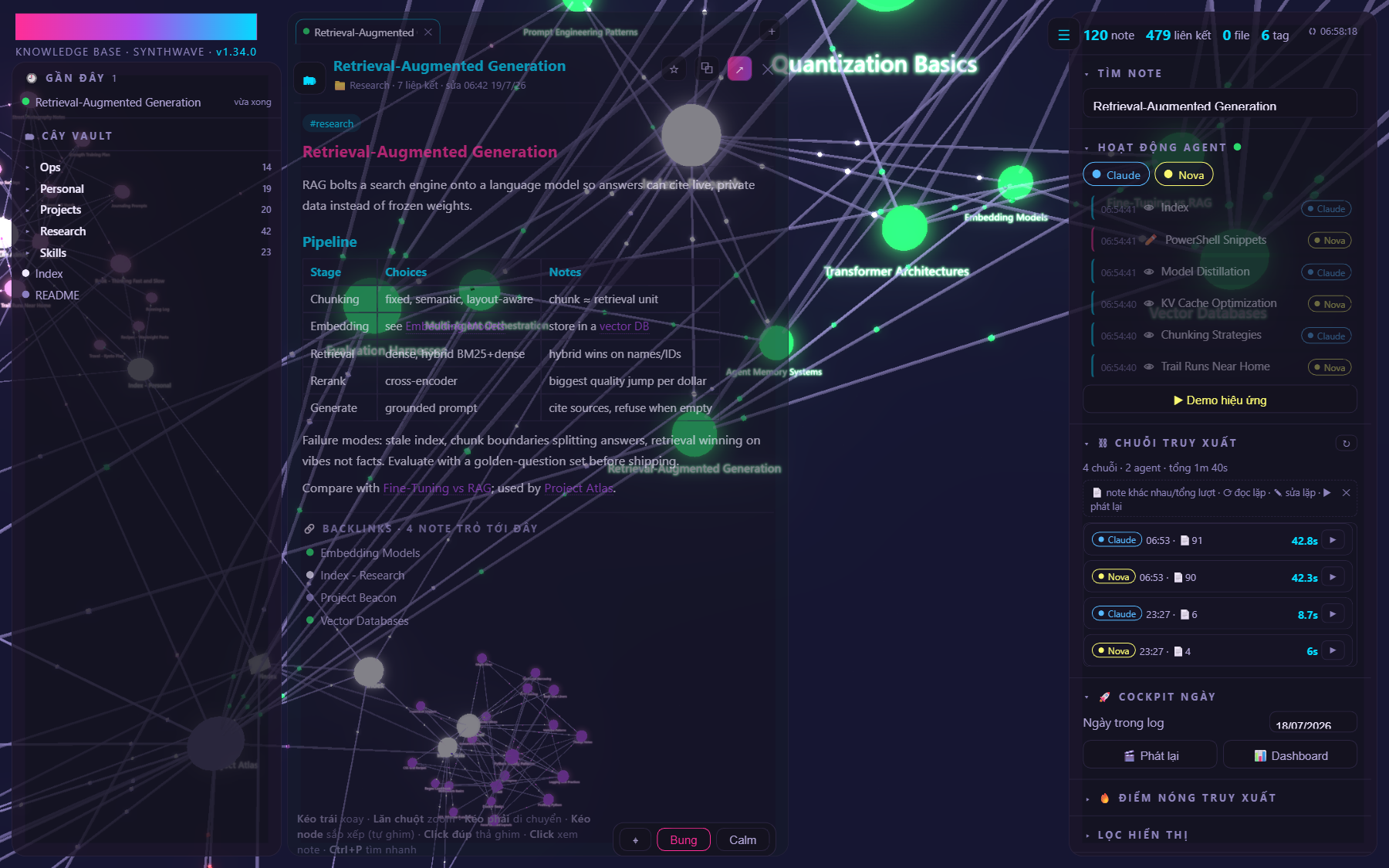
Reader with wikilinks & backlinks · folder tree · Ctrl+P everything-search · tabs, split panes, pins
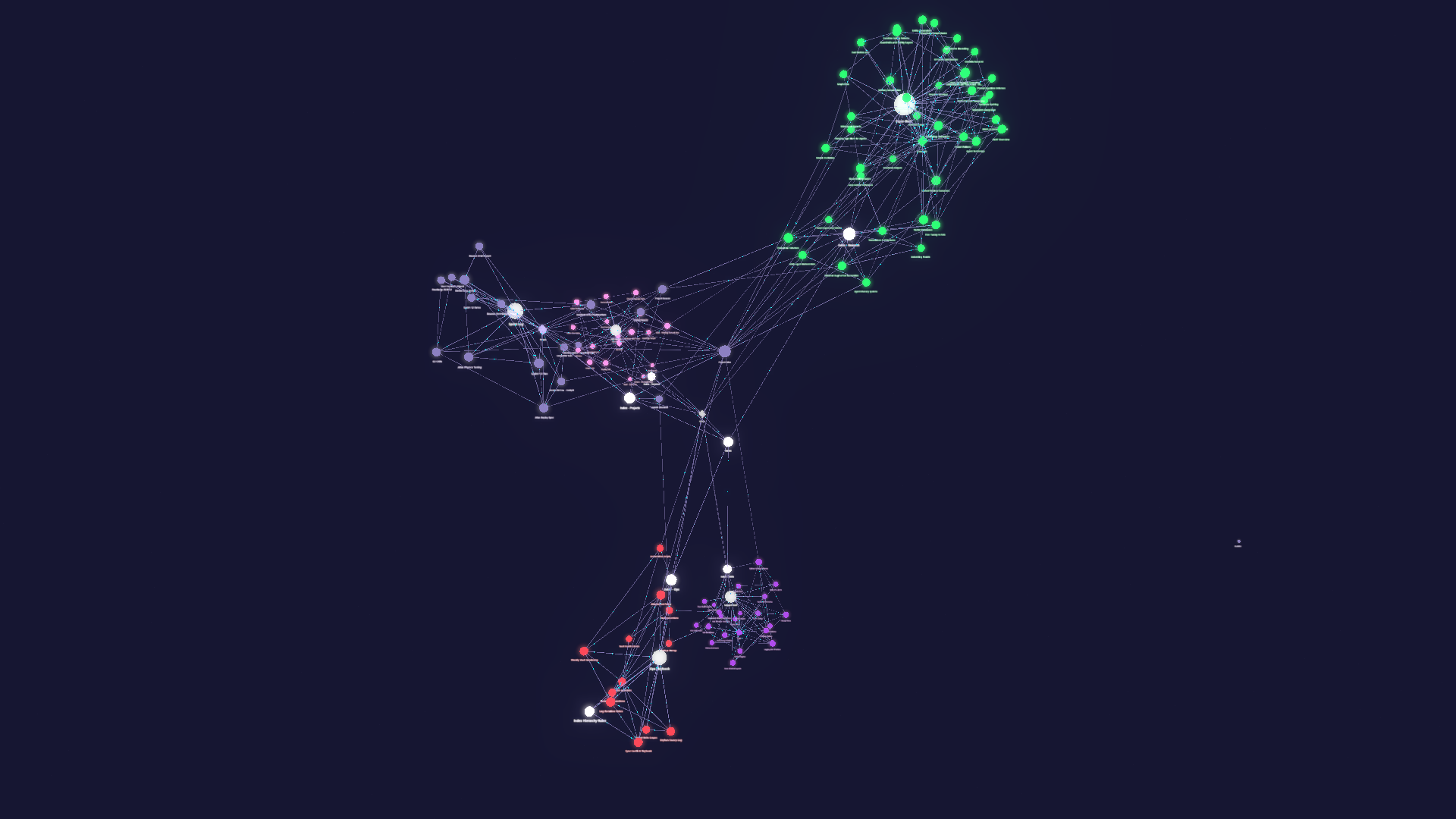
Synthwave 3D graph
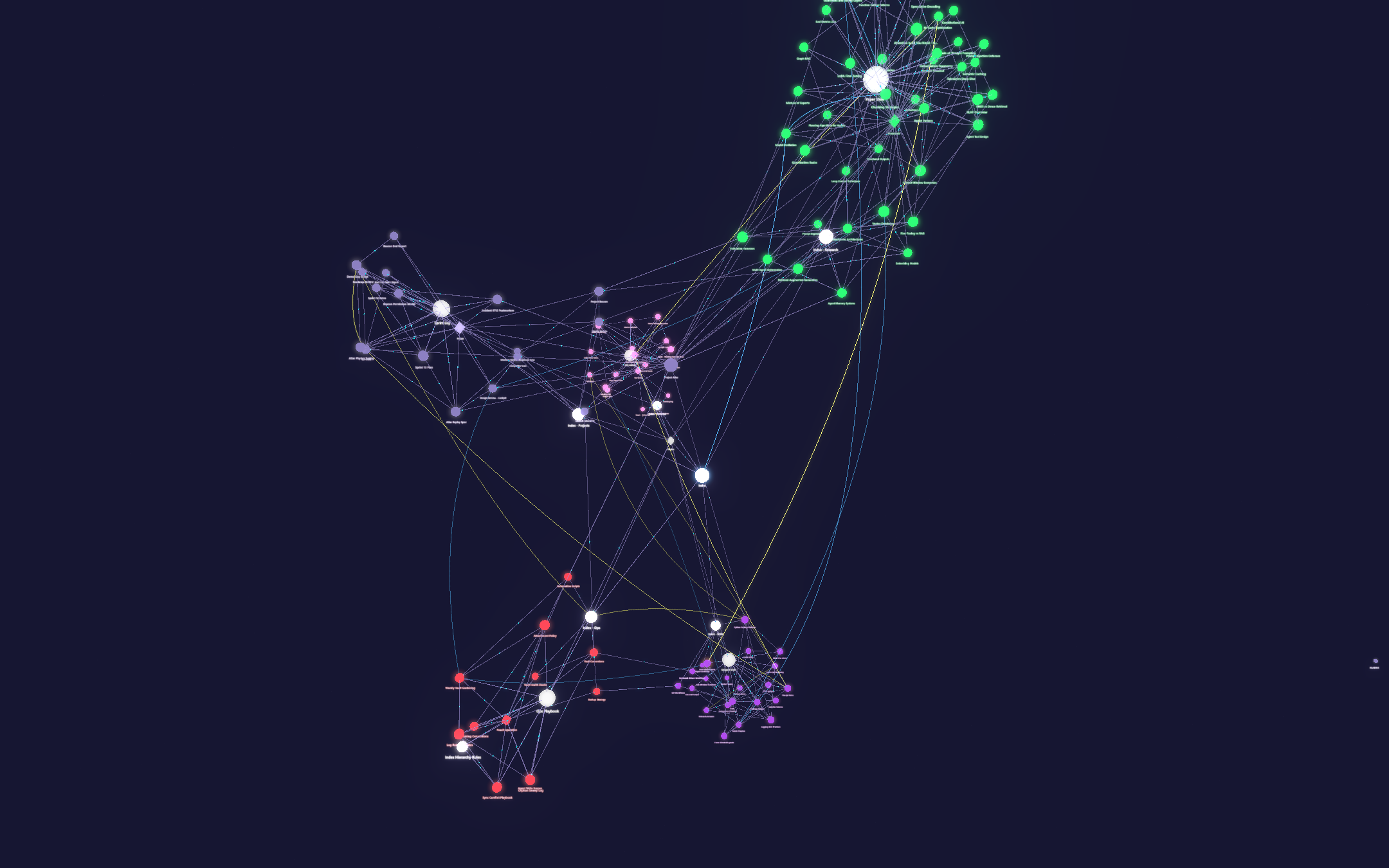
Force-directed galaxy of notes, tags and files. Degree-aware physics, cluster magnet, collision guard, adjustable neon.
Agent activity layer
Claude Code hook out of the box; any agent via one JSONL writer. Per-agent colors and replayable retrieval chains.
Heatmaps
Recent-window and long-term cumulative access frequency — your vault's hot zones glow and swell.
Multi-machine
Per-host journals live in the vault. Machines syncing over OneDrive / Drive / Syncthing merge history automatically.
Self-healing server
Single instance keyed by port, auto-restart on source change, stale-process cleanup — and it never kills what it can't verify.
Reader & finder
Click a node to read the note. Quick switcher searches names, #tags and full text — diacritic-insensitive.
Two agents, full throttle
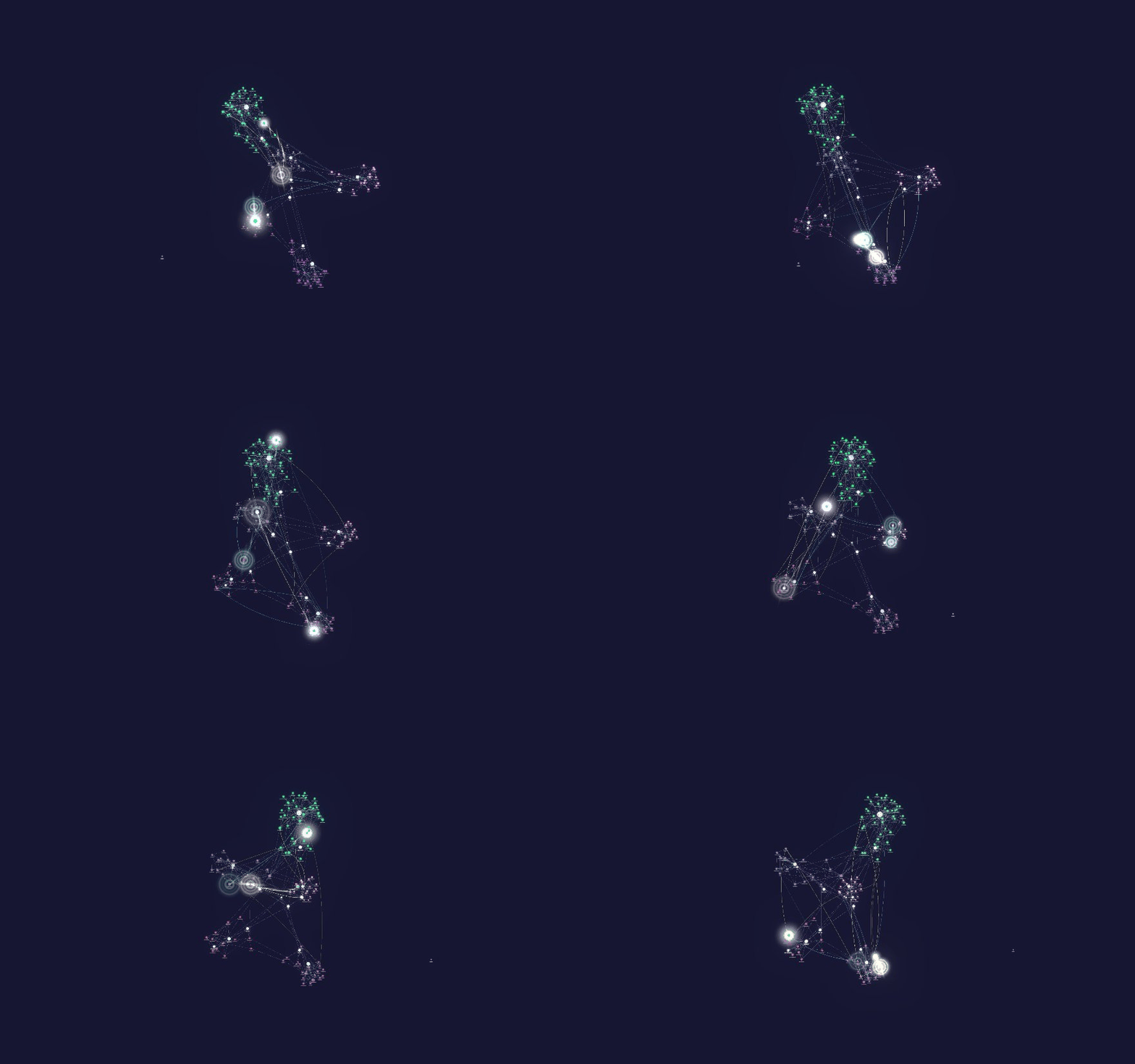
Claude and Nova jumping non-stop across 120 notes — comet trails, hyperspace hops, impact ripples. Live capture, no editing
The aftermath
Claude's blue and Nova's yellow trails woven across every continent of the vault
How it works
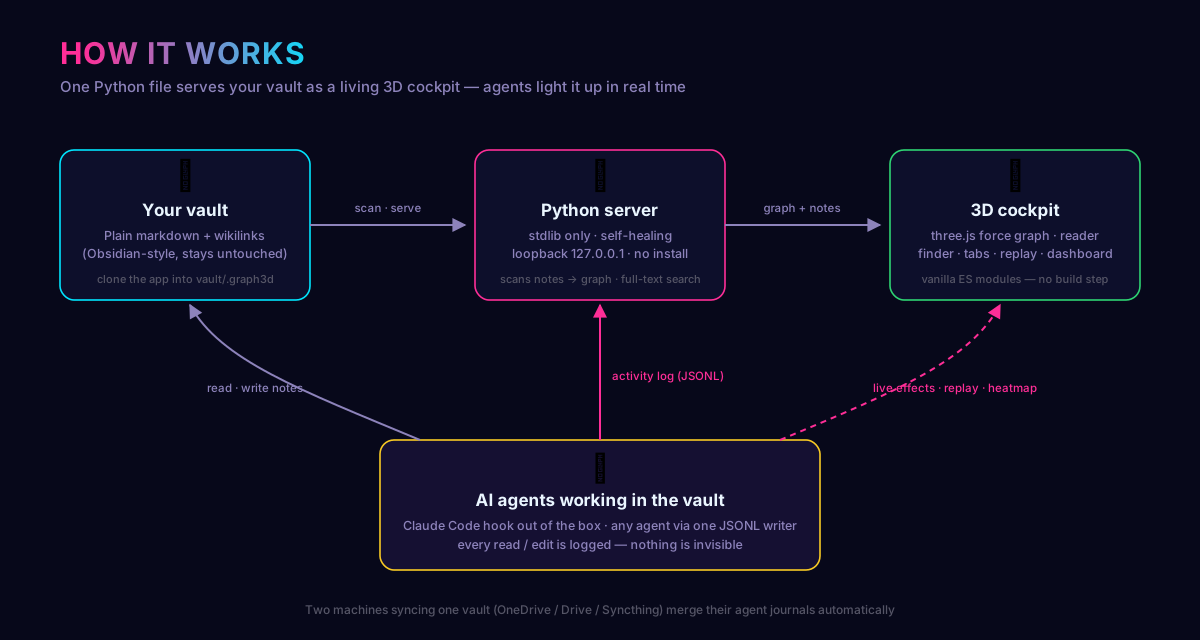
One Python file serves your vault as a living cockpit — agents feed the activity layer